
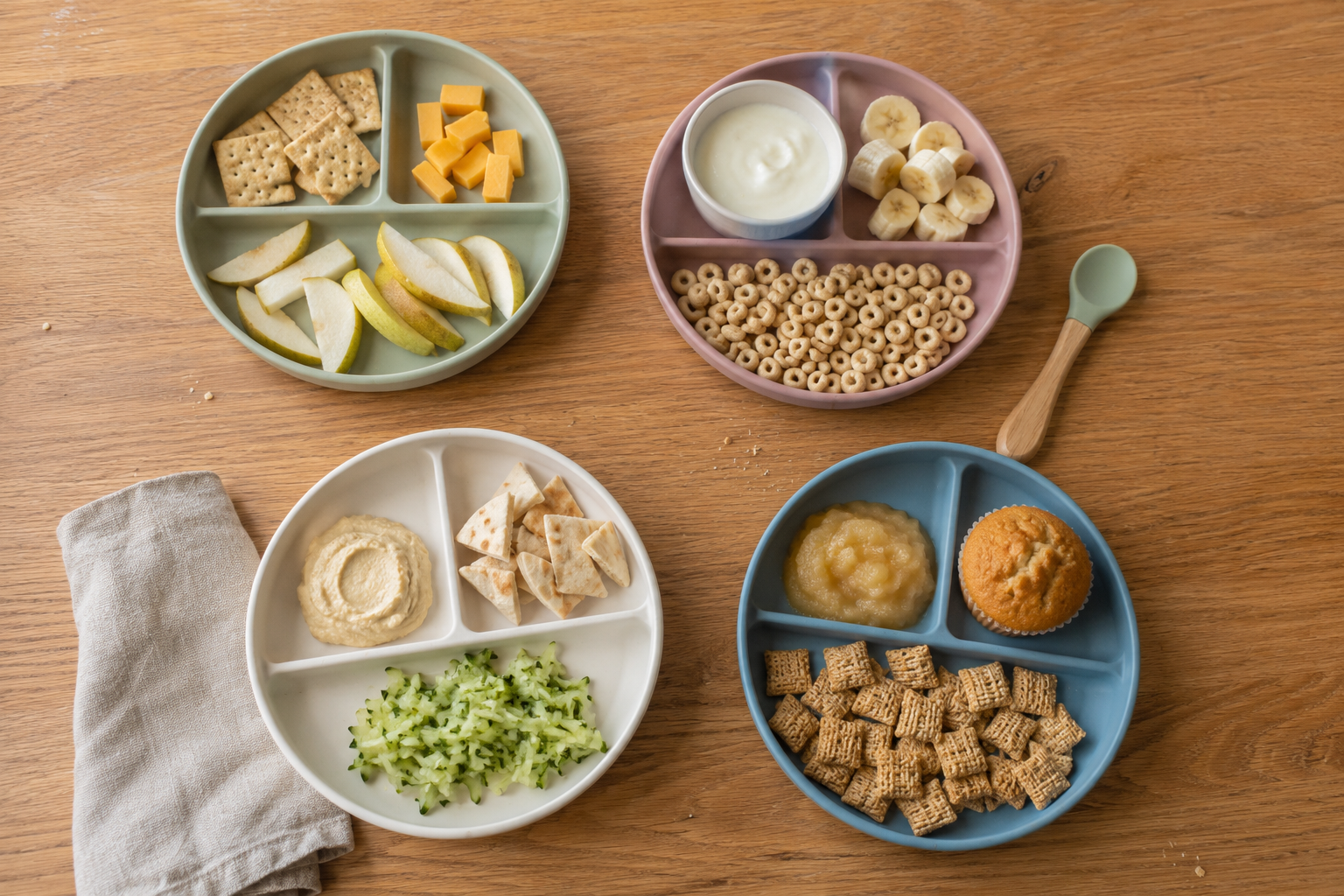
Realistic snack ideas made with ordinary food—because nobody has time to cut a cucumber into a woodland creature at 3:17 p.m.
Toddlers are deeply committed to keeping us humble. They will eat something enthusiastically at daycare, refuse the exact same food at home and then ask for a snack twelve minutes after dinner.
With three little kids, I have learned that snack time does not need to be impressive. It needs to be quick, familiar and easy enough to assemble while somebody is asking me a question, somebody else is crying and I am trying to remember why I walked into the kitchen.
These no-cook toddler snack plates are not tiny charcuterie boards. There are no sandwiches shaped like bears and nothing requires a special gadget. They are simply realistic combinations of ordinary foods that a picky toddler might eat—which is about as confident as any parent should be when discussing toddler food.
What I mean by a “snack plate”
A snack plate is just two or three foods served together in small portions. I usually include at least one food my child already knows and accepts. The other food can be something different, something they have eaten before or simply whatever is available in the fridge.
The foods do not need to match. They do not need to create a perfectly balanced miniature meal. And your toddler does not need to eat every item for the snack to count.
“No-cook” means there is no cooking required at snack time. A few ideas use convenient foods that were cooked earlier or purchased ready to eat, such as a hard-boiled egg or a mini muffin. Use what works for your family.
A quick toddler food-safety note
Choose foods and textures that are appropriate for your child’s age and eating abilities, and supervise young children while they eat seated upright. The CDC advises avoiding small, sticky or hard foods that are difficult to chew and swallow. Cut, mash or otherwise prepare food in the right shape, size and texture for your child’s development. You can review the CDC’s choking-prevention guidance for specific examples and preparation details.
Only serve foods your child can safely manage. Adapt each idea for allergies and your family’s needs, and check ingredient labels when necessary. If you are concerned about your child’s eating, growth, swallowing or reactions to food, speak with their healthcare professional.
Five snack plates for when you have almost no time
1. Cheese, crackers and soft pear
Add a few crackers, age-appropriate pieces of cheese and very ripe pear cut safely for your child. It feels like a complete snack despite requiring almost no thought—which is exactly what I want from food in the middle of the afternoon.
2. Yogurt, banana and dry cereal
Serve plain or flavored yogurt with banana and a small handful of age-appropriate cereal. Keep everything separate if your toddler is suspicious of foods touching. Apparently yogurt touching banana can be a crisis even though both foods were acceptable moments earlier.
3. Applesauce, grated cheese and toast fingers
This is a useful nearly-empty-fridge combination. Spoon applesauce into a small bowl and add grated cheese and toast cut into manageable strips or pieces.
4. Hummus, soft pita and grated cucumber
Cut soft pita into pieces and add a little hummus for dipping. Grated cucumber offers a different texture without expecting a hesitant eater to tackle a large raw vegetable piece.
5. Thinly spread nut or seed butter toast with berries
Spread the butter thinly over toast and cut it appropriately for your child. Add soft berries on the side. Use a nut or seed butter your child has already been introduced to and that is safe for your household.
Five more filling toddler snack plates
6. Hard-boiled egg, toast and soft fruit
Use a store-bought or previously prepared hard-boiled egg, cut safely for your child. Add toast and a familiar soft fruit. This can also rescue the evening when your toddler barely touches dinner and then announces they are hungry at bedtime.
7. Cottage cheese, canned peaches and crackers
Drain canned peaches packed in water or juice and cut them as needed. Serve them beside cottage cheese and crackers. If cottage cheese is unacceptable on sight, start with a very small amount instead of filling an entire section of the plate with it.
8. Avocado, tortilla pieces and grated cheese
Mash ripe avocado and serve it with soft tortilla pieces and grated cheese. Your toddler can dip, scoop or completely ignore the avocado while eating only the cheese. All three outcomes are possible.
9. Mashed chickpeas, pita and soft tomato
Lightly mash rinsed canned chickpeas with a fork, adding a small amount of olive oil or plain yogurt if you want a softer texture. Serve with soft pita and ripe tomato prepared appropriately for your child.
10. Ricotta toast with soft pear
Spread ricotta on toast and serve ripe pear on the side. If toppings are currently offensive, put the ricotta beside the toast instead. Deconstructed food is still food.
Five snack plates for toddlers who hate foods touching
11. Banana, cereal and cheese
Three familiar foods, three separate little piles and no surprise sauce. This is not groundbreaking cuisine. It is, however, the kind of snack that can prevent everyone from unraveling before dinner.
12. Cream cheese, pita strips and strawberries
Serve cream cheese as a dip with soft pita and strawberries prepared safely for your child. If dipping is not their thing, spread a small amount onto one piece and leave the others plain.
13. Mini muffin, yogurt and berries
Use a store-bought or previously made mini muffin with yogurt and soft berries. This works especially well when your toddler wants a baked snack and you would also like to offer something else without turning it into a negotiation.
14. Plain leftover pasta, grated cheese and soft peas
Cold leftover pasta can absolutely be a snack. Add grated cheese and fully cooked, soft peas that have been gently flattened if needed for your child. No reheating and no requirement that the foods interact with one another.
15. Tortilla roll-up, banana and applesauce
Spread a thin layer of cream cheese or an already-introduced nut or seed butter onto a soft tortilla, roll it and cut it into manageable pieces. Serve banana and applesauce separately.
Five “we desperately need groceries” snack plates
16. Crackers, fruit pouch and cheese
This is the snack plate version of doing your best with what is left. Empty the pouch into a bowl if you want the plate to feel more intentional—or hand them the pouch because today is not the day for extra dishes.
17. Toast, banana and thinly spread nut or seed butter
These basic ingredients can become toast with a thin spread plus banana on the side. Familiar food is not a parenting failure. Sometimes familiar food is what gets everyone to the next grocery trip.
18. Canned pear, yogurt and cereal
Drain canned pear, cut it safely and serve it with yogurt and age-appropriate cereal. Canned fruit is still fruit, and it does not become questionable in the produce drawer two days after you buy it.
19. Mashed beans, tortilla and avocado
Rinse and mash canned beans, then serve them with soft tortilla pieces and mashed avocado. Start with tiny portions if either spread is unfamiliar. A teaspoon is much less intimidating—and wastes less food—than a full scoop.
20. Applesauce, dry cereal and a mini muffin
It is beige. It is convenient. Your toddler may be delighted. Not every snack needs to showcase the entire produce department.
How I make snack plates less stressful
Start smaller than you think
A large portion can feel overwhelming to a toddler and particularly discouraging to the person who eventually scrapes it into the garbage. Begin with a small amount. You can always offer more.
Include one familiar food
I am not trying to surprise my children into eating something. Including a familiar option makes the plate feel safer while leaving room for another food without turning snack time into a test.
Let ordinary food be good enough
The internet can make toddler snacks look like a competitive sport. Your child does not need a themed grazing board. Cheese, crackers and fruit served on a regular plate are perfectly respectable.
Keep expectations neutral
I decide what foods to offer; my child decides what and how much to eat from what is available. Some days they eat all three foods. Some days they lick one cracker and leave. I try not to treat either result like a character assessment of them—or me.
Repeat the easy winners
You do not need twenty different snacks every week. This list is here to give you options, not a new standard to maintain. Find three or four combinations that work and repeat them without guilt.
A simple snack formula to remember
When I cannot think of anything, I choose:
- one familiar carbohydrate: toast, crackers, pita, tortilla, cereal or a mini muffin;
- one more filling food: yogurt, cheese, egg, hummus, mashed beans, cottage cheese or an already-introduced nut or seed butter; and
- one fruit or vegetable when available: banana, ripe pear, berries, canned fruit, avocado, grated cucumber or another safely prepared option.
That is a flexible idea, not a rule. If all you have is crackers and applesauce, serve crackers and applesauce. The snack police are not coming.
If your toddler suddenly hates everything
If snacks are not the only struggle, read my realistic picky-eater meal ideas and low-pressure strategies. It includes simple lunches and dinners for the phase when your toddler appears to have removed every normal food from their approved list.
Feeding toddlers can feel wildly personal, especially when you made the food and they reject it before it reaches the table. But one refused snack does not mean you chose the wrong food, and one beige afternoon does not define your child’s overall diet.
Offer what you have. Keep the portions manageable. Let ordinary food be enough. Then make yourself a snack too—because there is a very good chance you have been surviving on the crusts they handed back to you.
Note: This article shares general meal inspiration from one parent to another and is not medical or individualized nutrition advice. Adapt foods, shapes and textures to your child’s development, allergies and healthcare guidance.
Leave a Reply